 Visions and Nature
 Winter finally shows its face.
Posted on January 16, 2012
The last couple of days temperatures finally dropped below zero.
Winter finally shows its face.
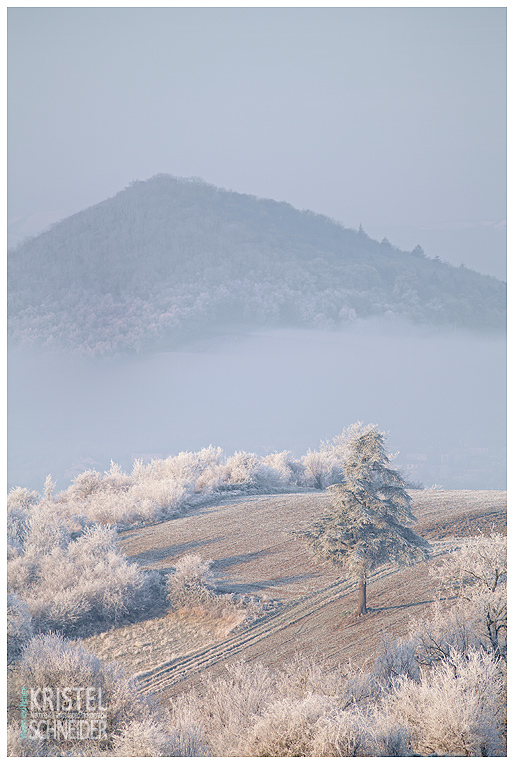
This morning my dog woke me up at 05h.30 so I decided to get dressed in some warm layer and go out into the cold. My goals was to get some images with white frozen trees. Around the house there was some fog but no white trees so I drove in the direction of Billom (Auvergne, France) a local village that is located in a nice valley with hills.
I was lucky, the trees where totally white and the mist was hanging low in the valley.
With the first sun light arriving soon I had to hurry. Arriving at one of my favorite spots the hills where totally in the mist and the sun was getting higher. So there was nothing else to do then wait. After 15 minutes the little Capel La Salette on top of a hill was isolated by some sunlight in the mist. Lucky me.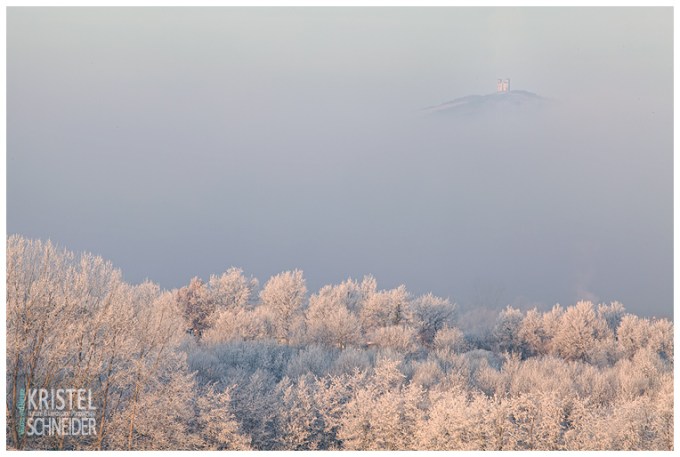
Then the mist disappeared slowly from the hills. 

New Photography Workshop in Spring 2012
Posted on January 9, 2012
by Kristel Schneider
NEW in 2012

Meadow in Spring
Photography trip
Spring, the season of colors and new life.
Date: 15-18 May 2012
The group: min. 4 – max. 6 people
Location: Auvergne | France
- Wild flowers (different species of Orchids, Pasque-flowers, Poppies, Wild Daffodils etc.)
- Insects
- Landscapes (meadows, forests, hills, mountains and volcanoes)
- Brooks, waterfalls & volcano lakes
- Colors and abstract details
- And much more
Price
425,00 € PP
More info: click here
Other workshops and seasonal special tours in 2012 click here.

Interview with photographer Emmanuel Boitier
Posted on December 19, 2011
Series interview with Nature Photographers
by Kristel Schneider
‘ I’m keener on photographers who show skills and know-how in the long run than on those who produce a very good shot every now and then’
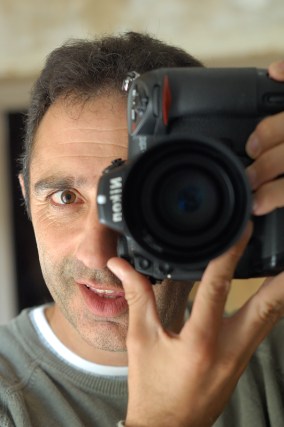
Emmanuel Boitier
When I moved to the French region Auvergne from the Netherlands I noticed a difference in the attitude of photographers. In Holland it is common to go out with your follow photographer and spend a nice day in nature, exchange your passion for photography or even some tips and tricks. Over here people are a bit more reserved. Emmanuel was the first local photographer willing to invite me to his favorite places in Auvergne. That was more than three years ago and Emmanuel is now one of the upcoming photographers in France.
His work is published in many magazines and this year, you hardly can open a magazine without seeing his work in it.
I just love his way of looking at nature, clean and crisp and I am very happy to introduce him to those who were not familiar with his work. When you look at his images you will see that he was influenced by Japanese photographer, Shinzo Maeda (1922–1998). So since I moved to the Auvergne I have found two inspiring photographers: Maeda and Boitier.

I’ve been a photo-reporter for some years now and I have contributed on a regular basis to a couple of French magazines, published both nationally and internationally. That is the main part of my activity– Emmanuel
Who is your inspiration?
I can’t say that I have been influenced by someone in particular, I’d rather say that my influences are many, including the works of some photographers and illustrators. I really like those who work with light and composition in their images and I am very receptive to photographers who would always strive to create beautiful images even if the subject they photograph is sufficient unto itself.
What inspires me is not compulsorily a photographer’s shot in itself, or a photographer’s set of shots. I’m more sensitive to the photographer’s background and foundation, that is to say, thought and work processes. I’m keener on photographers who show skills and know-how in the long run than on those who produce a very good shot every now and then. I really like it when I can see some kind of coherence instead of portfolios compiling single shots from all over the world. Therefore, if I had to set an ideal, as a photo-reporter, it would be a photographer of the National Geographic who combines news and artistic excellence in a magnificent way.
What do you like about Nature Photography?
I don’t really wonder what I like or what I don’t like in nature photography. It’s my life, it’s essential and vital to me. There is no other justification or any usefulness in it either.

Are there things you don’t like about Nature Photography?
What I really don’t like is some nature photographers’ proclivity to show themselves and their ego off to advantage nowadays and of course all the negative effects of such an attitude. As far as I’m concerned, photography has never been a way to perform or to show off, it has just been an artistic way to express myself.
Do you have any tips for Visions and Nature readers who would like to become professional nature photographers?
To my mind there is only one way to become a photographer, and it’s to take pictures again and again. You have to work endlessly, and keep on training the way you look at things. Photography has to become your sole way of thinking – or almost. Moreover I think you have to build up some knowledge as a naturalist, get to know the wildlife you want to take photos of, and try to understand how scenery and landscapes work too. You can learn all this in books but nothing will ever replace wild experience.
Last, you have to remember to make your work be known all over if you want to be distribute it. It’s an understatement but today’s world is mainly virtual and many think that they only need to own a website, to take part in forums on line or to social network to introduce their work to the rest of the world. Many tend to forget that there is nothing like real live exchange, especially today when we literally drown under images.
What are your specialities?
I have the chance to be able to evolve in a couple of fields : animals and wildlife, flora, landscape, macro photography and illustrated report. However, landscape photography is the one that appeals the most to me.

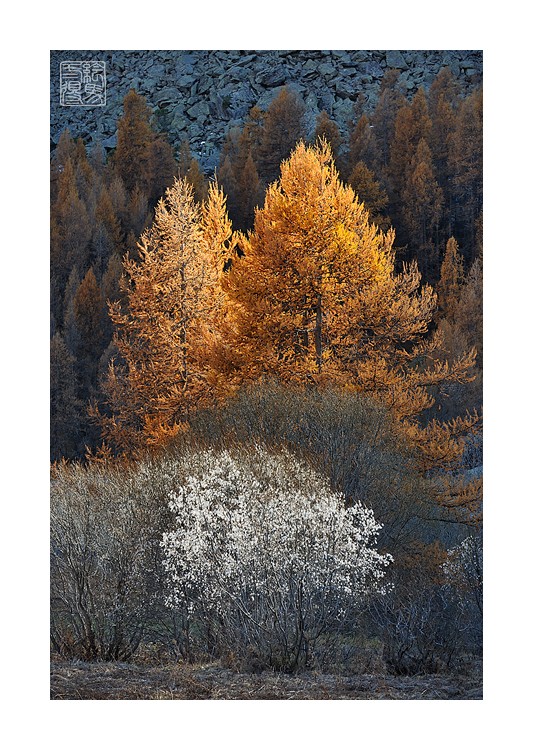
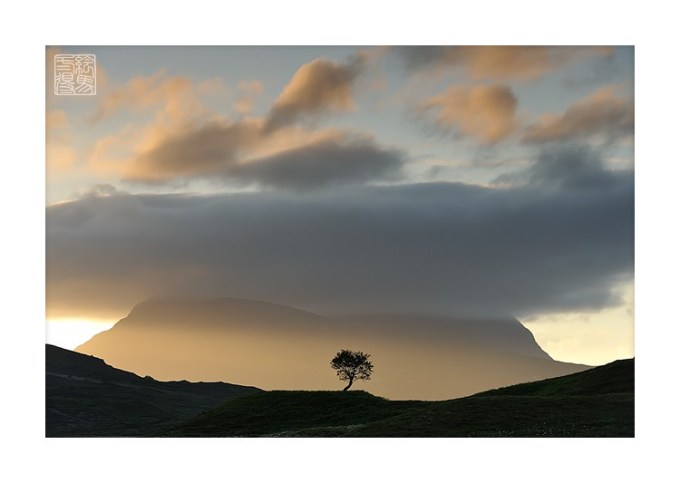
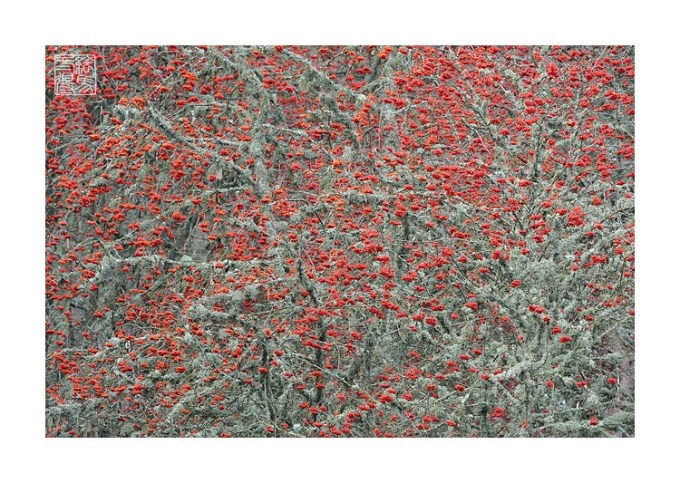

Share with us one of your personal favorite photographs?
It is really hard for me to emphasize one picture. But I must admit my sympathy for the bonsai-like tree in the snow. I took it very close to my home, during a snowy day. Besides the fact that it is a familiar tree (my elder daughter liked climbing on it), this image made me become aware that there was another way in photography. I mean an ‘artistic’ way vs. a ‘realistic’ one. Actually I believe that this picture made me understand many things, and had strongly modeled my current photographic work.
You are now on Visions and Nature Blog, a Nature and Landscape Photography Blog from Kristel Schneider. Do you know her work?
Yes, we got to know each others work when she moved to France. I appreciate her work because, as so many female photographers, she is not in performance but in emotion.
I like her own special way to look at the Auvergne area, where we both live. Her photos show me things I’m familiar with, through a different point of view, which is very enriching.
The series Interview with Nature Photographers is almost finished.
In January 2012 I will close this series with a living legend in Nature photography.
All photographs are Copyrighted © 2011, Emmanuel Boitier — All Rights Reserved
Abstract images via panning technique
Posted on December 4, 2011
Abstract images via
panning technique
by Kristel Schneider
‘To create interesting images of moving subjects requires some practice’
In my latest blog post I commented on Serge Deboffle’s exhibition entitled Art Animalier. Looking at what he showed at the Nature Photo Festival in Montier en Der made me look quite differently at the cranes gathering on Lac en Der.
It’s quite renowned that November brings thousands of cranes to France, in their migration from the northern parts of Europe. A couple of weeks ago I had the opportunity to see some big flocks flying together, and I could even go to Lac en Der before sunrise. To be there at the break of dawn when they gradually awakened to the first lights of the day was quite a unique experience then, as they slowly gathered to reach the day’s feeding spot.
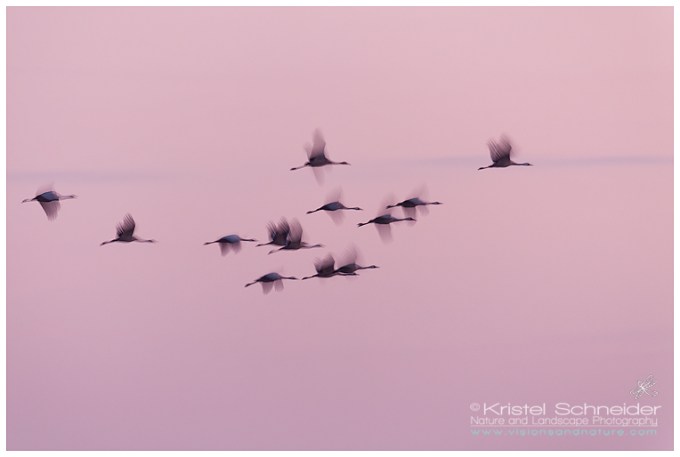
This year, I have to admit, the lack of water in the lake was a big problem: the birds were too far away to be captured as portraits or even landscape shots. That’s when I could recall Serge Deboffle’s work to my mind and decided to experiment on the technique of abstract images. One of the techniques I currently used was panning, i.e. you move the camera horizontally and scan the moving subject as it moves along.
Proper panning imples motion. It creates the feeling of movement and speed without blurring the subject – as a slow shutter speed would tend to do. Indeed, think of the Tour de France: the biker you photography is sharp but the road and the surrounding are a blur, giving the impression of movement and speed.
My idea was to get the exact opposite in my images : I wanted the crane not to be sharp, or let’s say, their bodies would be but not their moving wings.
That was not as easy as I might have imagined, just because you want to see something, and not just a blurry stripe or some dark dots floating in the sky of your photo. So after numerous and various camera settings, I managed to capture some kind of picture I once had had in mind.
The result will be the same as painting: some people will claim that kind of photography is not their cup of tea, as opposed to me. Indeed, in my opinion, it’s always nice to learn and experience something new while trying out new techniques.

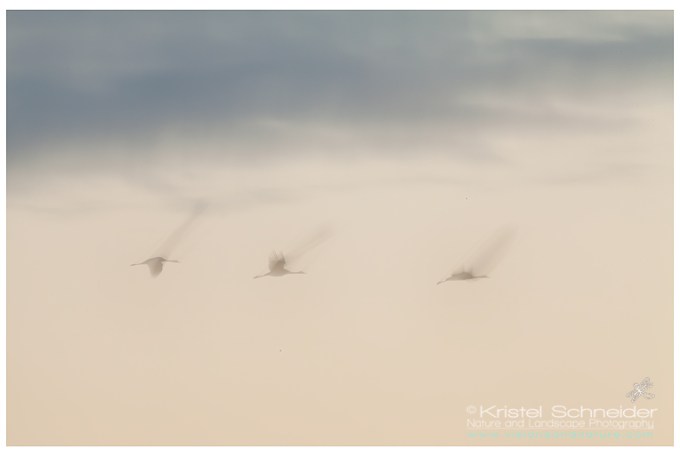 Look for other Crane images: Fauna gallery
Visit Kristels website: click on logo

 Visions and Nature