 Visions and Nature
 Interview-series: Cindy Jeannon
Posted on March 19, 2014
Interview Cindy Jeannon
by Kristel Schneider
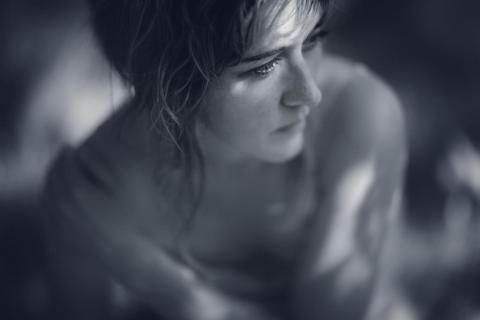
- (c) Alexandre Deschaumes
I sometimes happen to dream about photos, imagine atmospheres and to be inspired by music, books, paintings and photography in my sleep. Then images come to life once I’m in nature.
Reading French magazine, Nat’images introduced me to Cindy Jeannon in 2011. We were both part of the publication ‘Special about nature female photographers’. The introduction explained that she had decided to live her life closer to nature and that ever since she had left her job in 2005, her live has been like a journey. Cindy’s images show that this private journey has developed into a great life experience full with emotion and creativity. Traveling in the French Vosges or in the northern part of Europe, in Norway Cindy’s images show her love for Nature. Beautifull winter mountain scenes picture impressive clouds and silhouettes or the serenity of emptiness and minimalistic subjects.

(c) Cindy Jeannon
Can you introduce yourself in a few lines explaining your background and how you got introduced to (nature) photography?
In 2005 I gave up my job in computers and a way of life that was too « conventional » to be more in tune with myself and with my wish to live closer to nature, to live a life that would be “different”. I first started with a career change and trained to become an Eco interpreter. Back then I already wanted to do nature photography, but it was impossible to change everything at the same time. I therefore focused on what seemed to me then as essential: a lifestyle closer to nature. For four years I led a “nomadic” life – I lived in many different areas in France to deal with nature awareness projects all over the country – such a lifestyle lightens you up from the heaviness of the material and allows you to reconsider your views and thoughts altogether. I have always materialized my thoughts visually, or so it seems, but I started materializing my emotions through images while strolling along the deserted Atlantic coast on long lonely nights. That’s also the moment when, in Autumn 2008, I decided to start a new life again, around the main question, “how do I relate to nature?” I then started a new journey, the one of my own personal experience based on intervals of total immersion into nature, looking for the primal link that connects us together, pondering on my own personal connection with nature, on Man, on society. I therefore moved to the Vosges Mountains at the eve of winter 2009 – a very icy winter.
My photos came to life after these moments when I be one with nature, when I dived into its roots to be able to read it, feel it and express it. I have always been attracted by the hardships and loneliness of mountains and great wilderness. So in autumn 2009 I left for the Sápmi area in Lapland (in the north of Sweden) along with Jean-Pierre Frippiat. This was the first of a series of journeys to the North, mainly in Norway – journeys that I did nearly without any assistance, to be “cut off from the society ” and to make one with great wilderness, journeys where living takes over time, where you can feel nature at large. These trips – in the Vosges Mountains and in Norway – are the moments from when I have developed another language, a language through images.


When you look at Nature photographers in general you see that woman are in the minority, why do you think this is? Do you think it is more difficult for a woman to be a nature photographer? An often said, maybe cliche expression is that female photographers are not in performance but in emotion. What is your thought about this?
It is true that there are less female nature and landscape photographers than males. First, maybe because it is not as easy for a woman to combine motherhood and a field job in nature, as it could be for a man. And so it goes in a way, which is imposed on us by society, however unfortunate it is on a cultural point of view though. And then again, such is the case almost everywhere, not just in nature photography.
Then, of course, we have to take the physical aspect in account. Especially when you carry heavy equipment and bear harsh weather conditions. As far as I am concerned this never has really stopped me, although I’m not the sportive type. So, I guess everything can be dealt with even if my hiking and camping experiences with male photographer friends have shown that we don’t have the same physical aptitudes.
Now, is there a difference between photos taken by a woman and photos taken by a man? I tend to think that sensitivity and strength can be represented in both, whatever the gender. However I think that personality-traits are different depending on gender; and that can be seen in the images.


Your project ‘ Métamorphose dans l’immensité du Bleu‘ is set in Norway, what is the origin of this project and how did you prepare this project. The creative part and the travel part.
I started the series during my solitary 4-month trip in Norway in 2012, when I had planned to merge even longer into the mountains. Unfortunately, I slipped on my first base camp and injured myself. How much worse can it get when you are no longer autonomous on a self-sufficient journey? I could not walk any more, still I decided to stay in Norway, alone, and think my trip over. On the first days I had to stay in the mountains because I couldn’t walk or drive. But my original idea was still strong: the trip had to go on, I had to live it through, whatever it took. As far as I’m concerned trip and nature are both a walk into the unknown. So as soon as I could drive again, I left the mountains for a safer place nearer a water place – first the lakes then the sea. That was how my images became the reflections of moments spent near water.
As for preparations for that trip (or for any trip in Norway), I make sure my vehicle, my bivouac and of course my photo and computer equipment can be self-sufficient. For that specific trip I had planned a 4-season logistics.
I also leave with a lot of books and music, which play an important part in my inspiration, and a travel book – my writing companion on the road – but no phone and no internet.
Preparing a trip is also to organize the before and the after of the journey, in order to manage it all well.


The subjects and compositions of your images are they a resolt of lots of preparations at forehand or is an image created in the field, like you see the composition building up at that moment.
I sometimes happen to dream about photos, imagine atmospheres and to be inspired by music, books, paintings and photography in my sleep. Then images come to life once I’m in nature. I don’t focus on which lens to use, I just let myself be driven by the outdoors. This is what I call “breathing” : I inspire what nature gives into myself and expire photos. Movement and light really inspire me, hence my big attraction to clouds. I often write down phrases which express what I feel then – I generally draw lines between what I feel inside, human interactions and what happens in nature. Photography is a philosophy in life: by observing and living within nature, I get to know myself and others better.
What are your personal photography goals for 2014 and what would you like to achieve in photography in the long term? Do you have any exhibitions or other events coming up ?
I’m planning to keep expressing myself through photography. There are moments when I’m in nature and take photos and there are also moments when these photos have their own life and materialize…in exhibitions for example, or in publications. It’s also very important to share my work with others: I think it would be meaningless if it was not shared.
Exhibitions, books and workshops – that are very dear to me – are ways for me to spread my philosophy with nature ; I can observe, accompany people, I can see the changes: human nature is as rich as nature itself.
Photography is not only a means to express myself; it is also a means to make people express themselves especially in training sessions and workshops. If I had to put what I would love to fulfill in photography in a nutshell, I would say “exchange”: expressions and interactions between nature, myself and others. I plan long-term projects because things happen slowly. I draw the big lines, then combine them with what happens in my life and then gradually build things up. I have ideas and plans for the coming months, but it’s still too early to talk about them. For the coming year, I have a couple of exhibitions planned.
In April I will be in the Bird Festival in the Bay of Somme (France). Later on in October I will be at the Traveling Festival of Saint Valéry en Caux and the international Photo Festival Montier en Der.
There are other places, but it’s still too early to talk about them.
Last October GDT invited me in Lünen. That exhibition had a big impact on me, as I really enjoyed meeting and exchanging with Northern Europe and Italian photographers. I think I really love showing my work abroad, public response being totally different.
Can you share with us some of your personal photographs you like best?
And can tell us about the conditions and your emotions when you captured this image.
(c) Cindy Jeannon
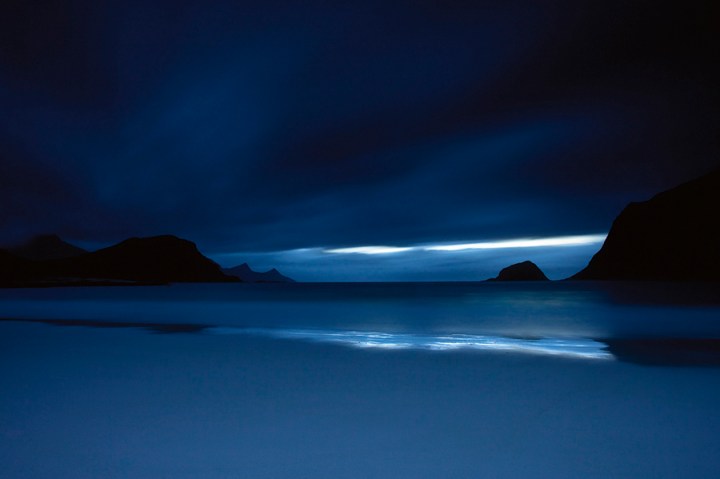
I chose the image of an atmosphere that pictures me the most: night and blue. I took it during my 4-month trip to Norway. I was on the Lofoten Islands at the end of August, it had be quite a chaotic day. So that night, I found peace by taking photos of the bay at nightfall. There was hardly any light. I love it when dark becomes black, when only the faintest light of hope remains. That’s what I meant to convey: even when situations surround us with darkness, there is always hope. I did a series of long exposures then.
This technique really appeals to me, as it seems to me that each image was created by nature and myself… as in a communion. I decide on how long the exposure has to last depending on light and what I want to say. Then, by looking at what movements happen during that length of time, I can imagine shapes and light traces that will appear on the image.
This is the last image of the series, the very last faintest light that could reflect on it, as of to give it more chance.
I wrote a text to go long that image, a text about the depth of blackness: The depth of darkness, Emptiness, absence, darkness, All reflecting the stars of the heart of the matter.
Cindy had a look at Kristel’s website (www.kristelschneiderphotography.com) and picked out some images that really popped out for her.
She explains why:
(c) Kristel Schneider
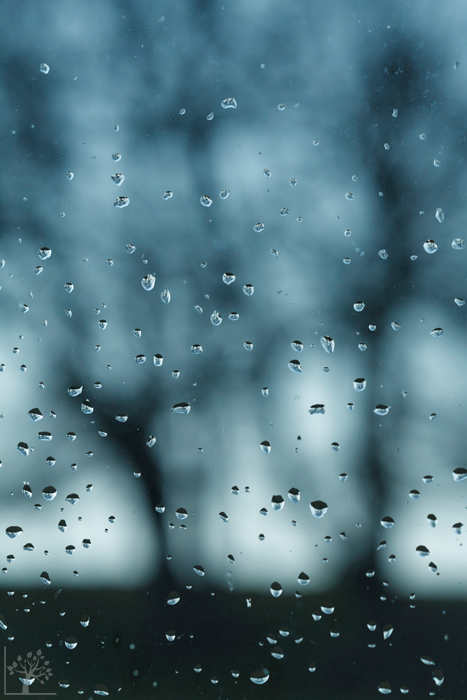
- I immediately picked up the first image. Some will say, “because it’s blue”. OK, it’s true, blue really appeals to me. But that image speaks to me because when I travel I’m often in the rain. When I’m in my car, I spend a lot of time looking through the window at how the rain changes the scenery around me. This photo takes me back to those moments when relation to time is different, when thoughts are set free. It also calls the idea of protection to my mind : how nice it can be to watch the rain from an inside place.
- Indeed, second image is also blue. I really love the peaceful and mysterious atmosphere – an atmosphere that really speaks to me.
- A dreaming moment. I love blurry pictures, as well as abstract one, which do not impose a point of view on you, but suggest it to the viewers and allow them enough freedom to build a personal interpretation.
- And finally, one that is totally different from the others. I chose it for the message it conveys to me… two small creatures helping each other out.


Coming up next, in the “Interview-Series” : Andrea Gulickx, don’t miss it!
See other interviews here
Dog’s Tooth violet
Posted on March 12, 2014
by Kristel Schneider
Dog’s Tooth violet
(Erythronium)

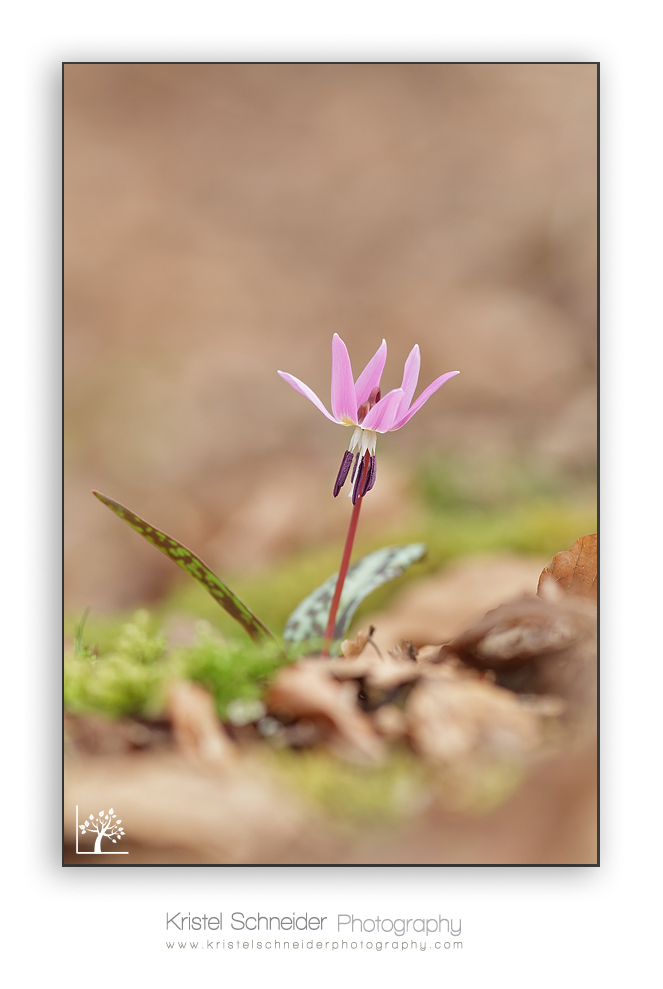
In Puy de Dôme (Auvergne, France) this wild flower is rather rare. They normally flower around March till April/May . Lately we have very nice warm weather in France and nature is far ahead.
So yesterday afternoon I had a look at the spot I know in the forest, to look if the little violets where already above the ground. Despite the nice weather I was still too early, but after some thorough ground search I found a couple of the flowers I was looking for.
Personally I find this flower very photogenic and a lust for the eye, in contrast with the little forest location where it grows. I think it’s an (old) dump place, full with thorns, dead leaves and trash (car tires, electrical wire, metal barrows, washing machines etc). It is the second visit for me to this place and I must say it’s a real challenge to crawl with your 300mm or 150 mm lens over the floor and find a nice low angle shot 😉


Interview-series: Alessandra Meniconzi
Posted on February 11, 2014
 Interview Alessandra Meniconzi
by Kristel Schneider
‘ …I am attempting to document the remaining indigenous people who are still living as they have had for thousands of years…’
I got acquainted with Alessandra’s work through her photo series “Nenets, the last nomads of Artic Siberia”. Taken by the pureness of the images I wanted to see more of what she did and started following her work. Alessandra is a photographer of indigenous people and traditional cultures. She prefers rough faraway places, mountainous sites and deserts. A closer look at her portfolio will make you feel the love and passion she has for her subjects in the way she captures the real beauty and pureness of these places and their inhabitants.


1 Q: Can you introduce yourself in a few lines, explain your background and how you got introduced to (nature) photography?
A: I was born in the south of Switzerland and I graduated from the College of Arts as a graphic designer. After working several years in different companies I took a 4- month trip to the Indian Himalayas. I first used the camera to document my trip around Asia just to show the images to my family and close friends. At that time it never crossed my mind to be a photographer, it just happened some years later. My career was launched when I submitted photos of people of some Chinese minorities to a magazine. Today my work centers on the ancient heritage, customs, spirituality, and daily life of indigenous people who are strongly connected to nature and whose traditional cultures are at risk of vanishing. Photography, for me, is still a strong passion, it is my life and I never I consider it as a job even if today I sell my images.
2 Q: What originally triggered your interest in indigenous people and traditional cultures?
A: What motivates me the most the interaction between wild places and ancient cultures, as well as a fascination with native people who subsist in isolated regions of the world, and a profound respect for them. I strive to portray the lives of indigenous people with authenticity, insight and sensitivity. The more encounters with the multitude cultures and traditions, the more I realize that we are losing our cultural richness through globalization. Sometimes, I regret that nowadays most people, magazines, and even the news mostly focus on the fragility of nature and wildlife. We should not forget that our planet is inhabited by an incredible kaleidoscope of ethnic groups, each with their own social and cultural traditions that have to be preserved. They all belong to the patrimony of mankind as a whole !
3 Q: By looking at the destinations you photographed you must put a lot of time in preparing your trips. Can you explain how you proceed and if you plan to do this all alone again?
A: I choose my locations according to my personal interest. My favorite places are a mix of wild places and minority people who keep the cultural and social traditions strong. The remote corners of Asia are still my favorite places to travel, as well as how you can approach them with photography. I avoid the places where all the tourists go ; I always look for more remote locations. Even for popular subjects, I try to find an unusual way to photograph them. If I go for a special assignment or for my private project I prefer to travel just with a close friend . That way I am more flexible and the photographic results are much better.
Over my trips I have also hitch-hiked, traveled on public buses and trains. I rent a car when there is no other way to reach the destination I want. By traveling on a mountain bike, I have learned not to haste and to cultivate the spirit of adaptation; but especially to be careful and to pick up what there is around for me. I don’t like to travel with big tour groups: you have to follow a guide and you are not free to go or stay wherever you like. And what if you have a lot of photographs to shoot of the same subject at the same place? Moreover, I don’t like to be driven by someone.
Before the internet it was more difficult to plan a trip, to have fast contact with local people abroad or to see what a place looked like. Today thanks to the internet things have been easier than ever. However I love both ways to plan a trip. Both have their pros and their cons.
With the internet the images of the place that you want to visit are valuable pieces of advice. These images can give you an idea of the location you want to visit. But it is important to read books or articles about your destination and study the itinerary on a map. Depending on the destination, I search for a specialized travel agency to organize a tour for a small group or just for one person. I send them my itinerary and sometimes I ask for suggestions. This works very well. I like to be surprised by the place I travel to and sometimes the journey changes from the original plan. Often when you travel you discover new places and you add these locations to the long list of your future travels!


4 Q: When I look at your images two words come to my mind: pureness and light. You have a way of capturing people in a very innocent and pure way and combine this with beautiful nature details and light. Some scenes can be prepared and anticipated, but a lot of them are the result, I think, of being at the right place at the right time. How long do you generally stay on one location and do you go back to the same place?
A: I try to spend time with them and learn about their social customs and traditions. We need to discover one other. If you respect and understand people of different cultures, it is much easier to capture their essence. I will never insist on taking a picture of someone who doesn’t give me the permission. I am a guest in their land, so respect is my first priority. I don’t like to just take pictures of a place or people that will be seen an “icon” or just because they are nice. If I work like that I feel that I give just the surface of the subject whom I photographed. My intention is to go beyond the surface. I have learned to go back to some places, meet the same people again, wait until the light is the best, experiment with different lenses, vantage points and different techniques.
It is not easy to make people feel comfortable in front of big lenses and professional cameras but it is possible. There is not a secret technique to take pictures with comfortable subjects; the time that you spent with them beforehand is the important and essential thing to do. What is important too is to learn about social custom and traditions. When you work in intimate situations with people, you need time to discover one another. When I meet new people, I like to explain my intentions, sometimes I need an interpreter (I will prefer someone who lives in the same place with the same culture – better someone local, friend or relative that speak a little bit of English). Other times I draw what I would like to shoot. But it is mainly with a smile or a friendly gesture that I am able to explain my photographic intention. The first thing that I have learned is to read their reaction and understand if they like to be my “model” for a while. If you respect and understand people (of every culture) it is easier to capture the essence and the feelings of the subject. I will never insist for a picture of someone who doesn’t give me the permission or refuse to be photographed.
Photography is another way to express your personality. When you press the shutter release of the camera your feelings and the way you see the world materialize. The camera is not the issue; the true factor is who stands behind it. To take photos is a kind of meditation: I need to have a free mind to find a good place and the time to concentrate. At home l always review my images closely, I am very critical with my work. And I try to learn from my mistakes and I wonder how I will make better pictures the next time I do.


5Q What are your photography goals, destinations for 2014 and what would you like to achieve ?
A: For more than a decade I have worked extensively in remote areas of Asia, documenting minority people and their traditional cultures. More recently, I have expanded my efforts to encompass Arctic and sub-Arctic regions that are being threatened by climate change, development, and resource extraction.
In the Far North, I focus on indigenous arctic people, their daily lives and customs, their relationships with nature, and their struggle to preserve their ancient cultures and maintain their ethnic identities in the face of climate change and the pressures of the modern world. Drawn to the harsh beauty and isolation of the Arctic, and concerned about the transformation occurring there due to rising temperatures and modernization, I am attempting to document the remaining indigenous people who are still living as they have had for thousands of years. I am attempting to preserve a compelling visual record of their vanishing ancestral traditions. When I work in the Arctic I feel that I make real contact with the power of nature. And by interacting closely with the native people there, I’m able to learn about and document their unique way of life in connection to the rhythms of nature. I’m trying to create images of these people and their cultures before they disappear.


6Q Share with us one of your favorite personal photographs? And tell the story behind it?
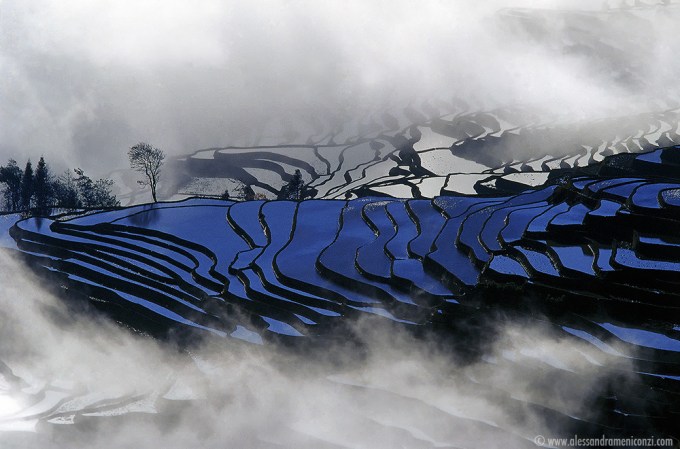
For a week, I went on excursions around the most panoramic locations of the Ailao Mountains in China. At the highest point of the mountain, a spectacular natural amphitheater appeared before my eyes. With the moving of the clouds and the rising of the sun, an extraordinary atmosphere that almost feels magical, I was captured by the splendor of the unusual scenery. The wind hit me with its gusts without a break. Taking photographs with the tripod became an almost impossible task. The day appeared to be misleadingly sunny; in the blink of an eye thick fog transformed into thick clouds filled with rain, which quickly blackened the sky. The sky in this area is nearly always cloudy and for over six months a year the entire region is wrapped in thick fog. I was able to take this image when, for a very short moment, blue sky reflected into the water below.
7Q: Do you have any exhibitions or other events coming up?
A: On 25 January I had a Slideshow in Italy. I presented my journeys to Arctic Siberia with the Nenets people.
In spring I have another exhibition but not the date and location is not decide yet. I will let you know.
Before the interview Alexandra had a look at Kristel’s website (www.kristelschneiderphotography.com) and picked out two images that really popped out for her and she explains why:
Winter is the most magical time of the year to shoot.
This image from the tree (tree gallery) is pretty meditative and give me a sense of calm and silence.
I can call this image; Winter of Solitude !
I like the pictures of flowers (plant and mushroom gallery). They express the delicacy and beauty. My favorite is this one from the Spring snowflakes.
The soft wash of the foreground has a strong emotional response for the focus flower as subject.
It is a nice and vibrant artistic interpretation.


50 Awesome Photo Workshops Around the World
Posted on February 6, 2014
Guess what!
Visions and Nature’s :Tuscany of Auvergne workshop is one of them !
Photoshelter made a list of just some of the photography classes happening around the world in 2014 and in chapter: outside of the U.S., Visions and Nature’s Tuscany of Auvergne is listed.
France: Kristel Schneider is teaching a 5-day workshop in Tuscany of Auvergne, a photo-holiday and learning experience wrapped into one: Aug. 24 -28th
For more information about this workshop/short photo holiday: see Tuscany the Auvergne or read the whole tour outline here.
To see the list of all the 50 awesome photo workshops happening around the world, click here.
Photograph the beautiful Tuscany of Auvergne, France
Posted on January 7, 2014
While people are talking about the winter of 2014, I have already prepared your summer break for August 2014, a 5-day photography workshop in the Tuscany of Auvergne, in France.A short photo holiday in combination with a great learning experience Photography workshop with
Photographer Kristel Schneider Date: 24 August – 28 August 2014
When you hear Tuscany you may immediately think of Italy. Before my discovery I did the same but now I know that in the heart of France there is a place called Tuscany of Auvergne, in Puy de Dôme.
So close your eyes and let your thoughts go ….think about…….sunflowers, garlic, picturesque villages, volcano chain, dramatic light and….French wine and food! Join me during these 5-days and you can expect: diverse hillside landscape scenery in the heart of the Tuscany of Auvergne with picturesque villages. The spectacular and unique light conditions playing on the dramatic Massif Central mountain and volcano chains, will take your breath away. We will explore the Billom area through the maze of small hillside roads and hiking trails. Although the main focus will be landscape photography those of you who like macro, close-up or street photography will have plenty of opportunities to indulge during the walks in the field and the small villages. Throughout the day, you will get personal field instruction as well as photo feedback. The group is kept small so that every participant gets enough personal attention.Be assured of a great learning experience and of course a lot of fun sightseeing and hiking along short trails. You will get introduced to the specialties of the area, visiting local organic wine producers and photograph the vineyards in the soft evening light.
More info: Workshop page (Eng) Meer info: Workshop pagina (NL)
Visit Kristels website: click on logo

 Visions and Nature